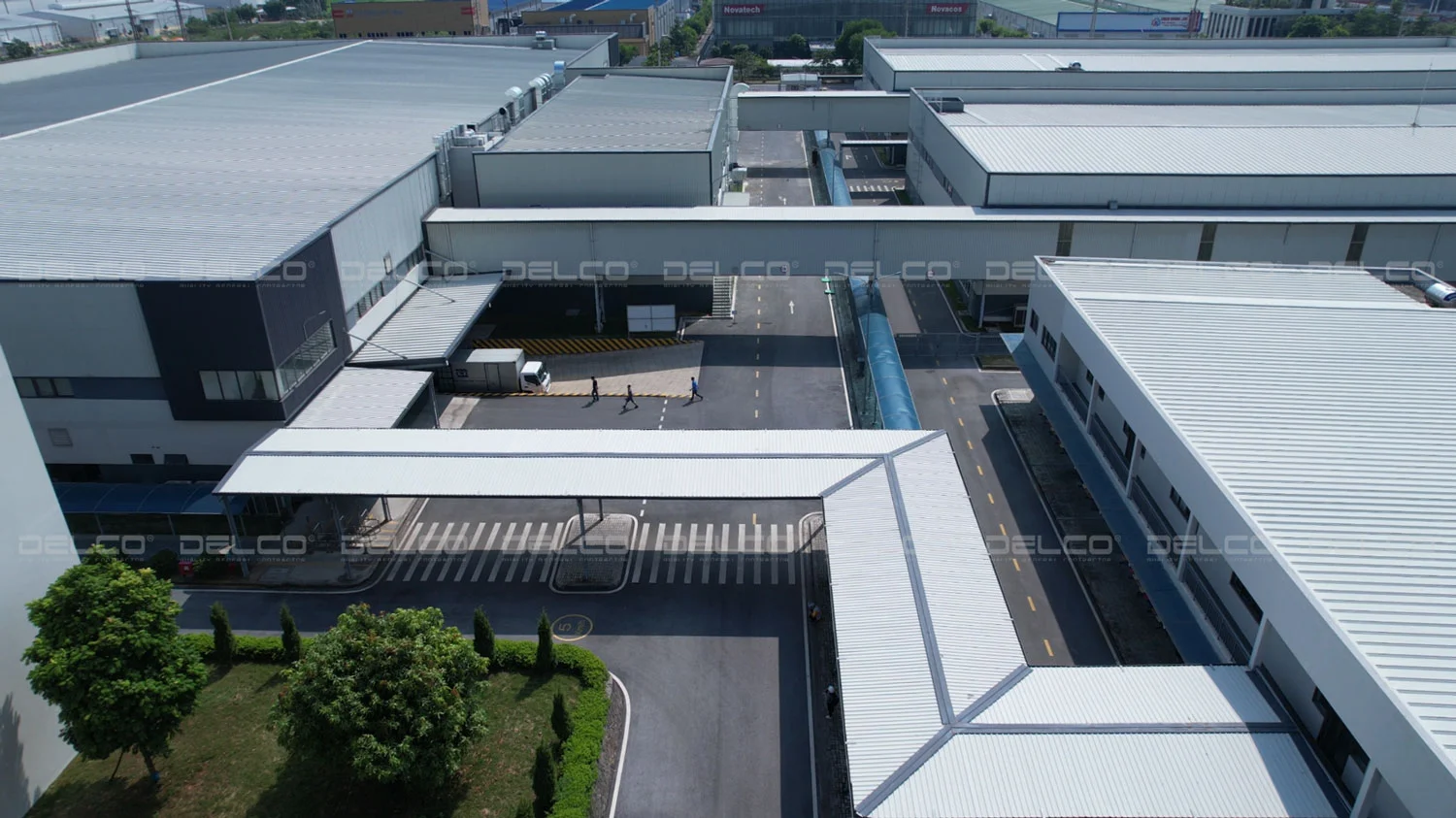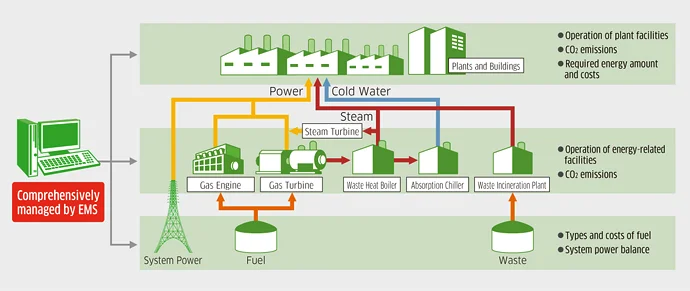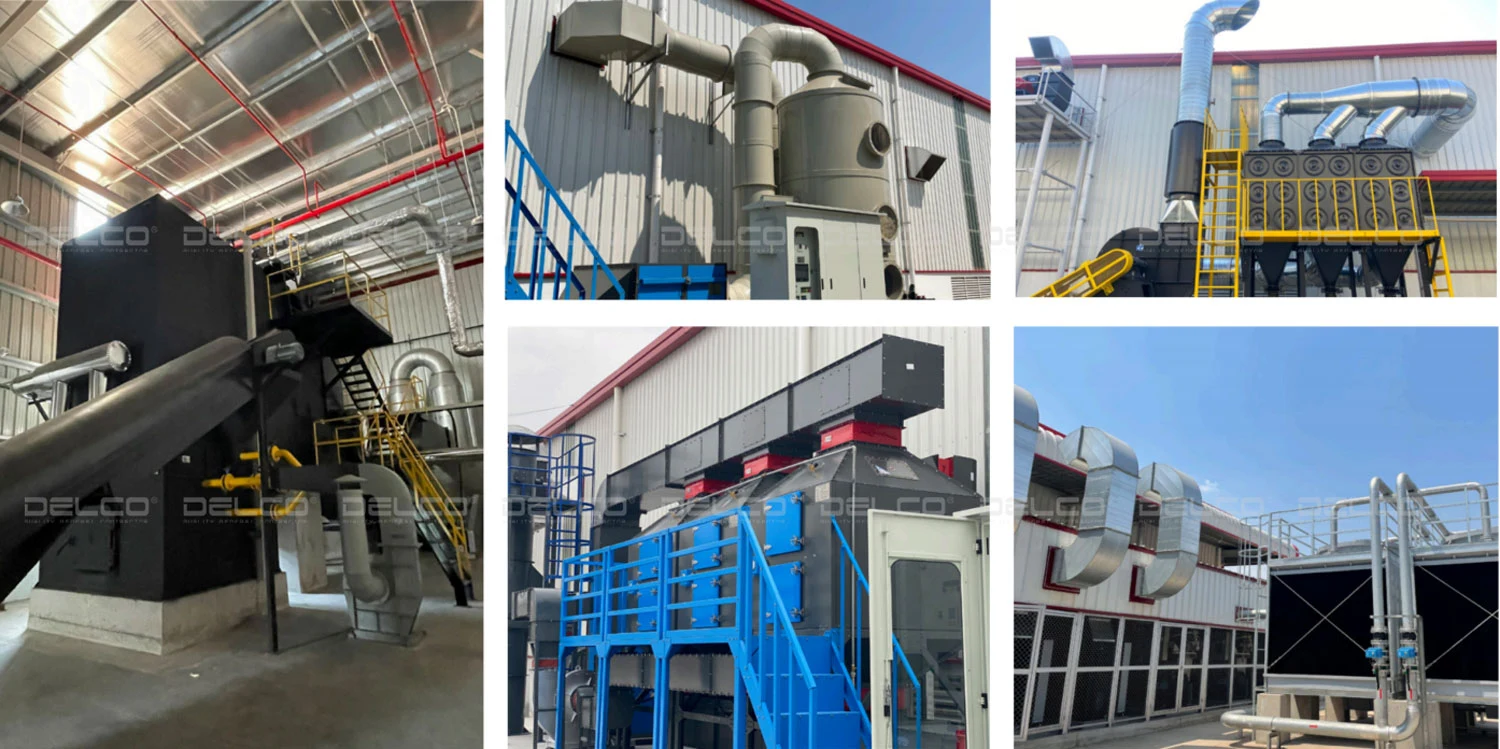


The factory electrical system plays a core role in production operations, therefore the installation and acceptance process must be executed precisely, complying with technical standards and electrical safety requirements. Based on experience in FDI factories, DELCO builds a structured quality-control process that keeps the system stable, safe, and ready for future expansion.
1. Factory electrical installation process
1.1 Earthing & Lightning Protection
This is the foremost task ensuring safety for the entire factory and should be carried out concurrently with foundation works.
Earthing field:
Install grounding rods and grounding mesh according to design; use exothermic welding to connect the rods and bare copper cables, ensuring long-term durability underground.
- Ground resistance test:
Measure grounding resistance immediately after driving the rods; typical required values are:
- < 10 Ω for lightning protection
- < 4 Ω for equipment safety earthing
- Sensitive equipment with stricter criteria must be referenced additionally before detailed factory electrical installation.
- Equipotential bonding:
Connect the grounding mesh with steel structures, equipment housings, cable trays, and metal conduits to create a continuous equipotential system, reducing voltage differences during fault conditions.
1.2 Cable tray & support
- 3D modeling:
Arrange cable trays in Revit/BIM to avoid clashes with HVAC, sprinklers, process piping, and to optimize technical space. - Support installation:
Hangers, anchor bolts and supports are selected based on cable load; hanger spacing is 1.2–2.0 m depending on load to avoid sagging. - Tray grounding:
Use bonding jumpers at joints and branch points to ensure electrical continuity along the entire tray route. - Clearance & allowance:
Maintain safe distance from sprinklers, HVAC, and leave ≥ 30% spare capacity for future expansion.
1.3 Conduits & Electrical panels
- Conduit system:
At junctions or underfloor runs, use RSC/EMT steel conduits or steel-core flexible conduits with plastic sheath; ensure proper IP rating at fittings and pull boxes. - MSB/DB panel installation:
Cabinets mounted on concrete plinths or supports; check for level, secure against vibration, and seal technical openings to prevent rodents or pests.

MSB distribution cabinet designed and installed by DELCO
1.4 Cable Pulling – Tension Control & Arrangement
- Installation: Use rollers, pulling ropes and tension measuring devices; comply with minimum bending radius 12D–15D as recommended by the manufacturer.
- Cable arrangement:
Single-core cables: arrange in trefoil formation with cable cleats to tolerate electromagnetic forces during short-circuits.
Multi-core cables: may be laid flat on cable trays.
- Environment: Work in dry conditions; after pulling, perform Megger test for insulation.
- Labeling: Attach Cable ID at both ends and at all direction changes, according to SLD and shop drawings.
1.5 Termination – Electrical Connection Control
- Crimping lugs: Use hydraulic crimping tool with correct die set to avoid loose connections causing overheating.
- Tightening torque: Tighten bolts and lugs using torque wrench per manufacturer’s torque spec; mark torque for future inspection.
- Phase identification: Use colored tape/heat-shrink tubing according to standard (Red – Yellow – Blue – Black – Yellow/Green).
1.6 Testing & Commissioning
- Cold test: Test insulation resistance, continuity, and check CT/PT if applicable.
- No-load & under-load testing: Energize, check motor rotation direction, phase sequence, and measure current and voltage at distribution cabinets.
- Thermal inspection: Use a thermal imaging camera to scan all connections under load to detect hotspots.
1.7 Labeling & Digitization (Operation Management)
Factories designed and installed by DELCO use QR codes for identification and management:
- As-built drawings & Single Line Diagram
- Catalogue / Datasheet
- Installation date, Warranty contact information
This digitized system allows quick retrieval, reduces dependence on paper records, and optimizes maintenance and operation management.
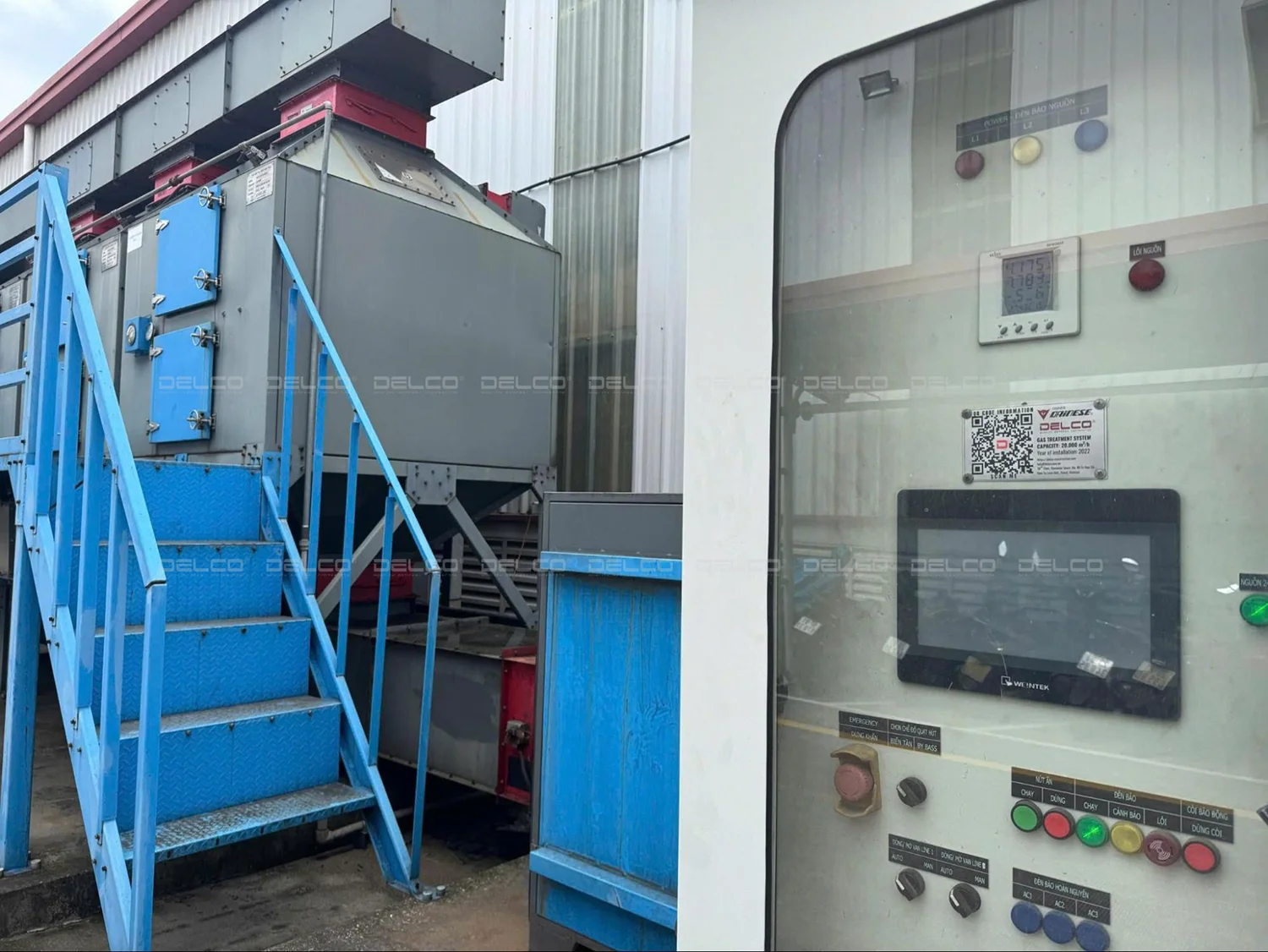
All electrical equipment installed by DELCO is documented via online QR codes for easy reference
2. Electrical safety acceptance procedure
2.1 Electrical system acceptance (T & C)
Stage: Dead Test (Cold Check)
- Visual inspection: Compare installation with drawings, check labels, cleanliness, and tighten all bolts.
- Continuity & insulation test: Verify proper wiring per diagrams. Perform Megger test for cables and busbars.
- Ground resistance check: Ensure grounding system reaches safety threshold (< 4 Ohm).
Stage: Live Test – No Load
- Voltage & Phase sequence check: Confirm voltage stability and correct phase rotation to protect motors.
- Function test: Verify indicator lights, meters, and ATS transfer sequence.
- Leakage current test: Use a leakage current generator to test capability of ELCB/RCBO to trip.
Stage: Interlocked & Full Load Test
- Interlock test: Simulate faults (overload, phase loss, fire alarm) to ensure protective devices trip as configured.
- Thermal imaging: Under load (minimum two hours), use thermal camera to scan connection points for abnormal hotspots.
2.2 Electrical Safety & Quality Management
Safety Measures (HSE)
- All construction and connection work must comply with QCVN 01:2020/BCT on electrical safety and fire safety regulations of QCVCN 02:2020/BCA.
- PTW & LOTO system: Strict enforcement of Work Permits and Lockout/Tagout for all operations.
- Hazard zone control: Set up barriers and signage for high-voltage testing areas.
- Personal protection: Provide arc-flash PPE when working on main power sources.
Quality Control (QC)
- Two-tier acceptance: Contractor performs 100% internal testing before inviting the investor for official acceptance.
- Digitized reporting: Test results and photos are uploaded in real-time to the project management system.
3. Why choose an experienced general contractor like DELCO for factory electrical systems?
The electrical system determines personnel safety, production line stability, equipment lifespan, and future expandability. Therefore, selecting a general contractor is not just about choosing a construction unit, but selecting a partner who understands the full lifecycle of a factory.
An experienced general contractor like DELCO will ensure:
- Integrated design and accurate calculation from the start, avoiding cost overruns and minimizing risks when expanding.
- Selecting standards-compliant materials and strict installation control, ensuring safe and durable operation.
- Professional acceptance and complete digital documentation, facilitating easy information retrieval throughout the project lifecycle.
- Applying smart factory model, optimizing energy consumption and reducing operating costs annually.

When a business builds a new factory or expands production lines, an experienced M&E general contractor such as DELCO will help ensure schedule, safety, and long-term operational efficiency — factors that are indispensable in a modern production environment.