

In general industrial factories, HVAC systems are primarily designed to provide comfortable working conditions for humans, with a relatively wide allowable temperature range. In contrast, in electronics factories, HVAC is considered an integral part of the technological system, where environmental parameters directly influence product quality.
Therefore, the approach to HVAC system design cannot be based solely on floor area and workforce size, but must closely align with production line characteristics, equipment specifications, and the control requirements of each manufacturing stage.
Temperature control
In electronic component manufacturing, temperature is no longer merely a comfort factor but a critical technological parameter. Many processes such as SMT assembly, AOI inspection, electrical testing, or packaging require stable temperatures—typically between 22 and 24°C—with allowable fluctuations usually not exceeding ±1–2°C, depending on each factory’s specific requirements.
Temperature fluctuations or uneven thermal distribution between areas can increase defect rates, especially for products with high component density. Therefore, HVAC systems must be designed by technological zones, with cooling loads calculated based on equipment characteristics, operating cycles, and the potential for future changes in production line configuration.
Humidity limits
Humidity has a direct impact on electrostatic discharge risks and the stability of electronic components. Low humidity increases the likelihood of static discharge, while high humidity can cause oxidation on component surfaces, affecting soldering quality and product durability.
Unlike general factories —where humidity only needs to remain within a range acceptable for human comfort—electronics factories require tight humidity control, commonly within 45–55% RH or according to specific process requirements. This necessitates active dehumidification solutions, directly integrated into the HVAC system and continuously monitored throughout operation.
Air cleanliness
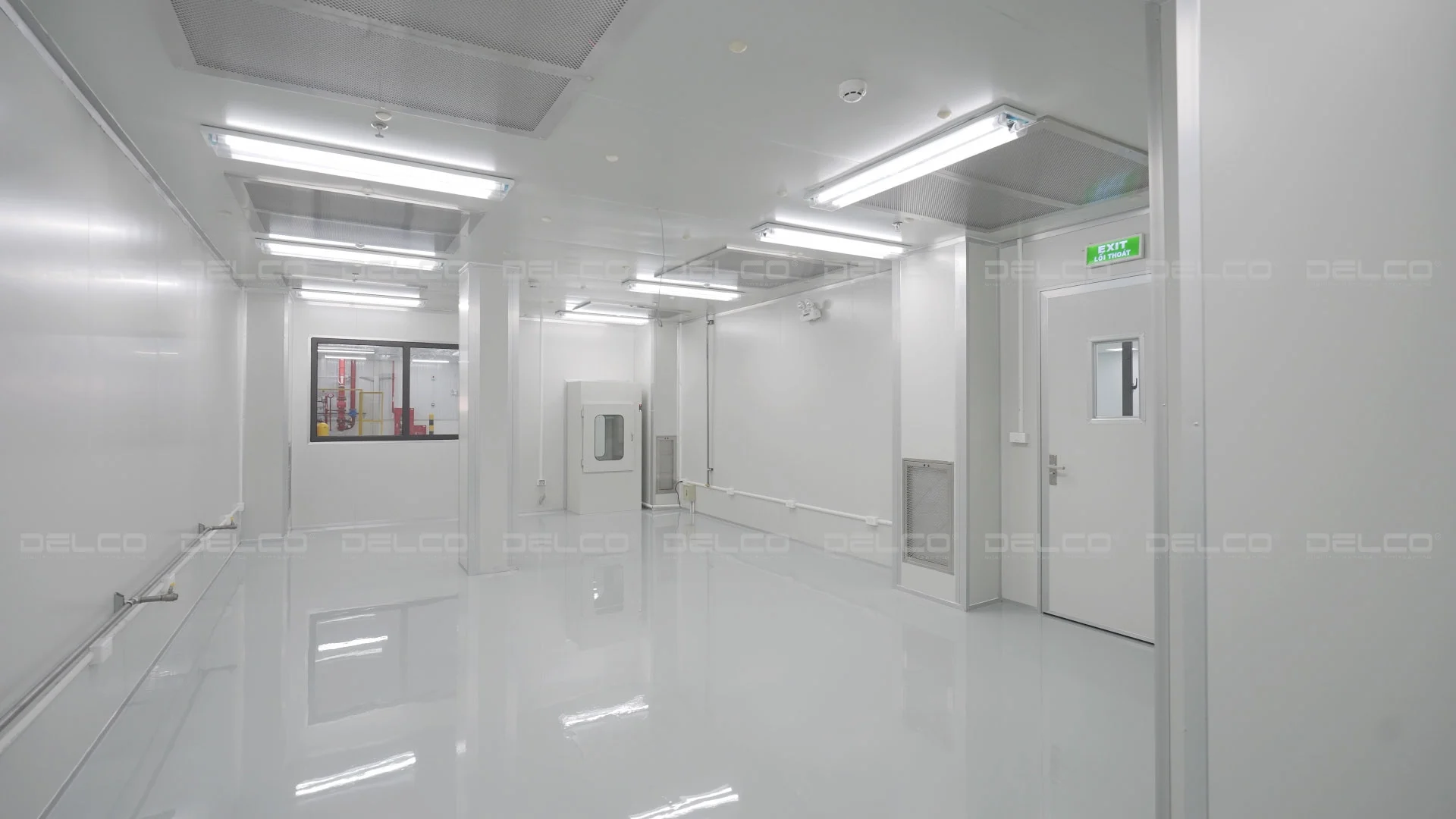
In electronics factories, air cleanliness is a mandatory technical requirement in many production, assembly, and testing areas. Many facilities must comply with cleanroom classifications ranging from Class 100 to Class 10000, depending on the product type and production stage.
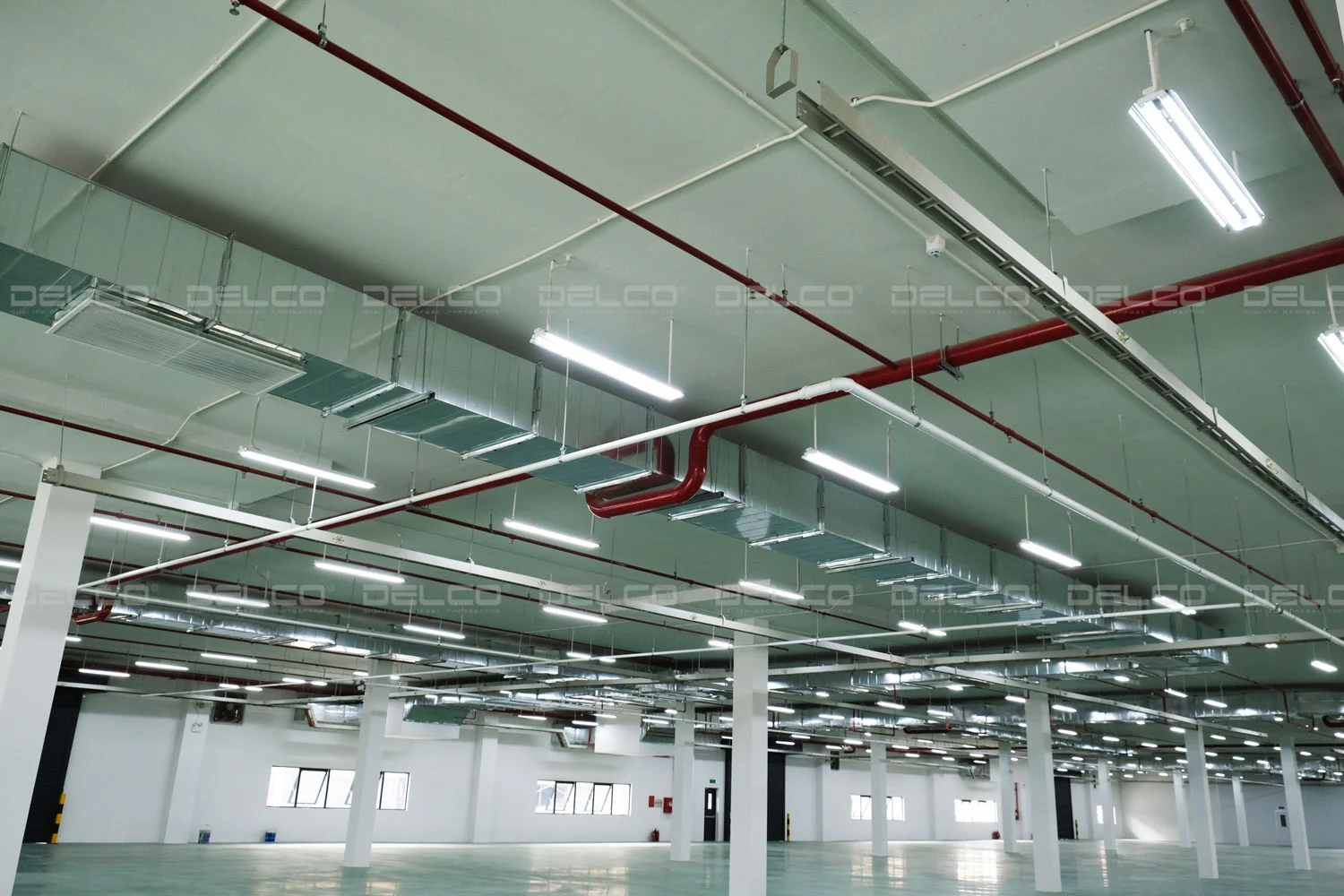
In such cases, the HVAC system not only regulates temperature but also controls airborne particle concentration through multi-stage filtration, high airflow rates, and frequent air recirculation. The placement of AHUs, selection of filtration levels, supply–return air organization, and technical space layout must be coordinated from the initial design stage. Retrofitting from standard HVAC systems often fails to meet cleanroom standards and poses operational risks.
Airflow and pressure
In electronics factories, airflow not only supports heat exchange but also serves as a contamination control mechanism. Areas with higher cleanliness requirements must maintain positive pressure relative to surrounding zones to prevent the ingress of contaminated air.
The HVAC system must be designed with a clearly defined pressure hierarchy, ensuring controlled airflow movement from cleaner areas to less clean ones. Improper airflow organization can significantly reduce cleanroom effectiveness and directly affect product quality.

Operational redundancy
Electronics factories often plan for expansion or technological upgrades during operation. Therefore, HVAC systems must be designed with appropriate redundancy, system zoning capabilities, and the ability to expand capacity when necessary.
Integrating centralized control and monitoring systems allows real-time tracking of temperature, humidity, pressure, and equipment status, enabling early detection of deviations and minimizing risks that could impact production.
Balancing technology and energy efficiency
Strict environmental control requirements make HVAC systems in electronics factories more energy-intensive than conventional systems. As a result, HVAC design must balance technological demands with energy efficiency through appropriate system configuration selection, demand-based control strategies, and optimized operating modes.
Read more: Four energy-saving solutions for HVAC systems – 2025
Read more: Comparison of industrial and commercial HVAC systems: Scale, function, and maintenance requirements
Read more: HVAC technology trends in Vietnam in 2025