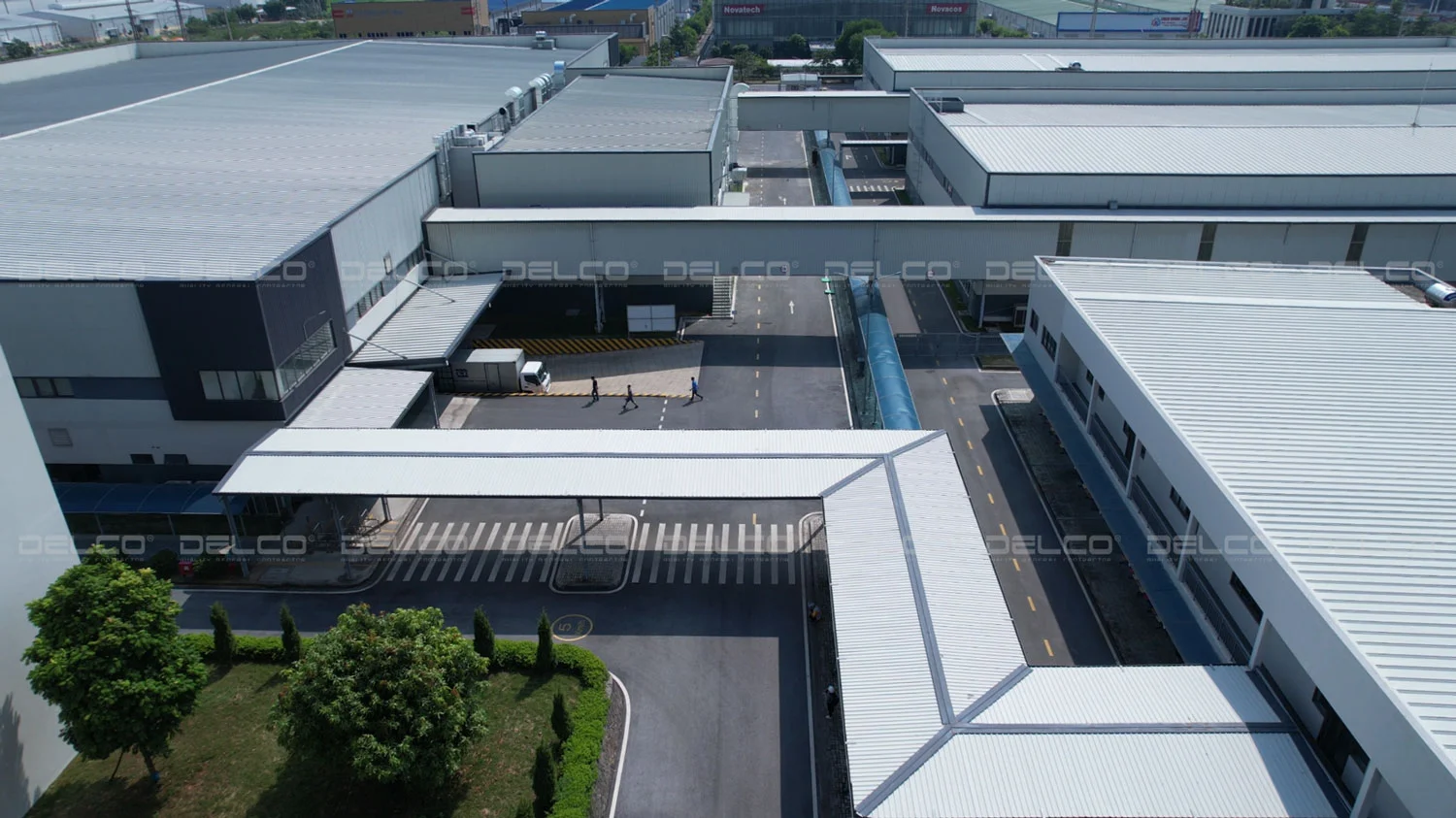


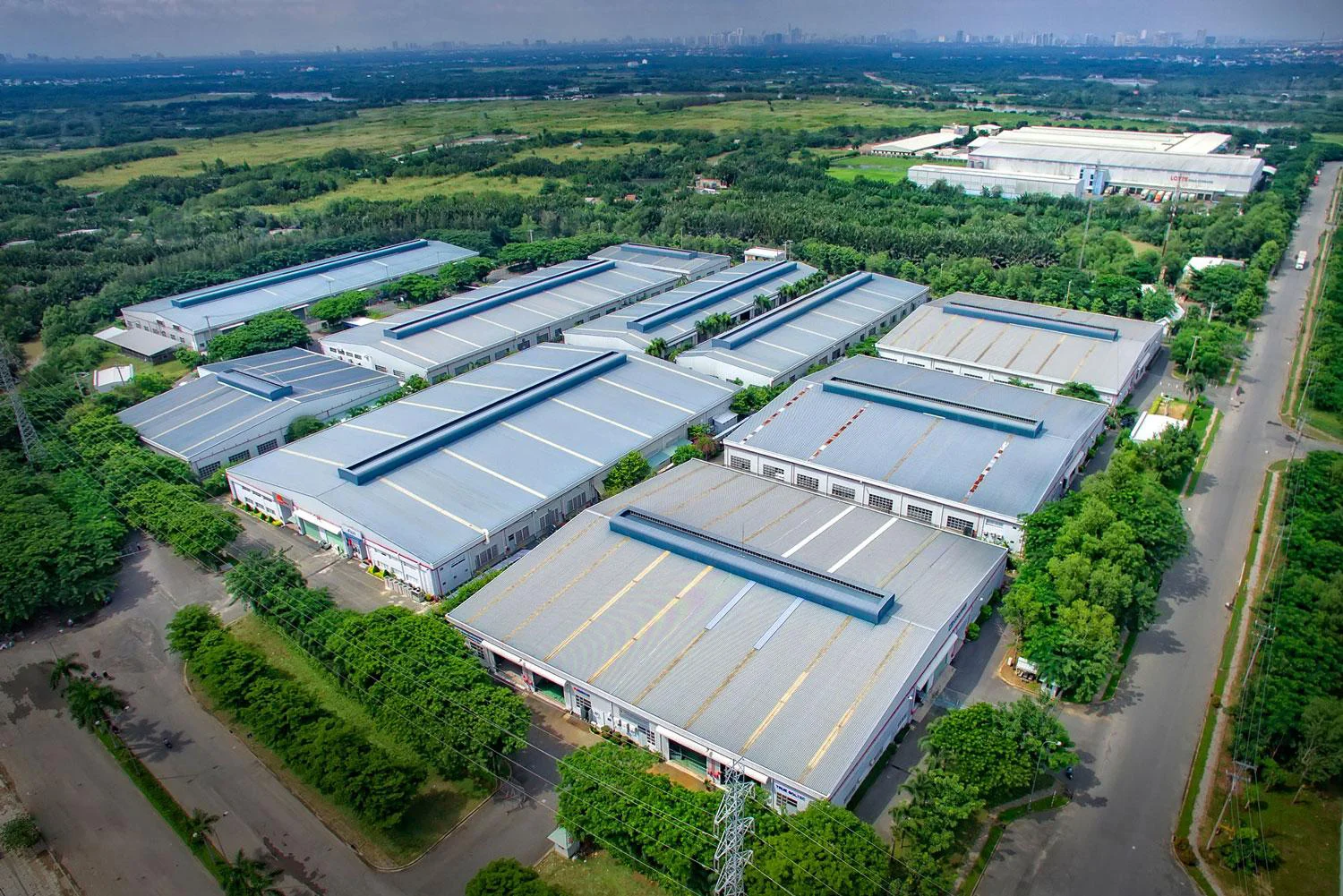
In the wave of global supply chain shifts, Vietnam is becoming the destination for many new manufacturing projects. To shorten implementation time and optimize initial costs, many businesses, especially FDI investors, choose to lease built‑to‑suit factories. However, these factories are usually only finished at a basic level and do not fully meet requirements for production functionality, technical infrastructure, or legal compliance. Therefore, fit‑out is not simply renovation, but a key investment stage that determines operational timeline, extra costs, and the long‑term stability of the factory. From a consulting perspective, this article helps businesses understand the scope of fit‑out, identify risks, and implement effectively in Vietnam.

1. What is a factory fit‑out?
Factory fit‑out is the process of completing the internal space and technical systems of a factory to meet operational and production requirements while ensuring legal compliance.
Unlike the civil construction (foundations, structure, roof, floor), fit‑out focuses on the items that determine the factory’s operational readiness, including:
- Production layout design and arrangement
- Installation of the factory MEP systems (electrical, water, ventilation, air conditioning)
- Fire protection and HVAC systems
- Office and auxiliary areas
- Industry‑specific technical infrastructure
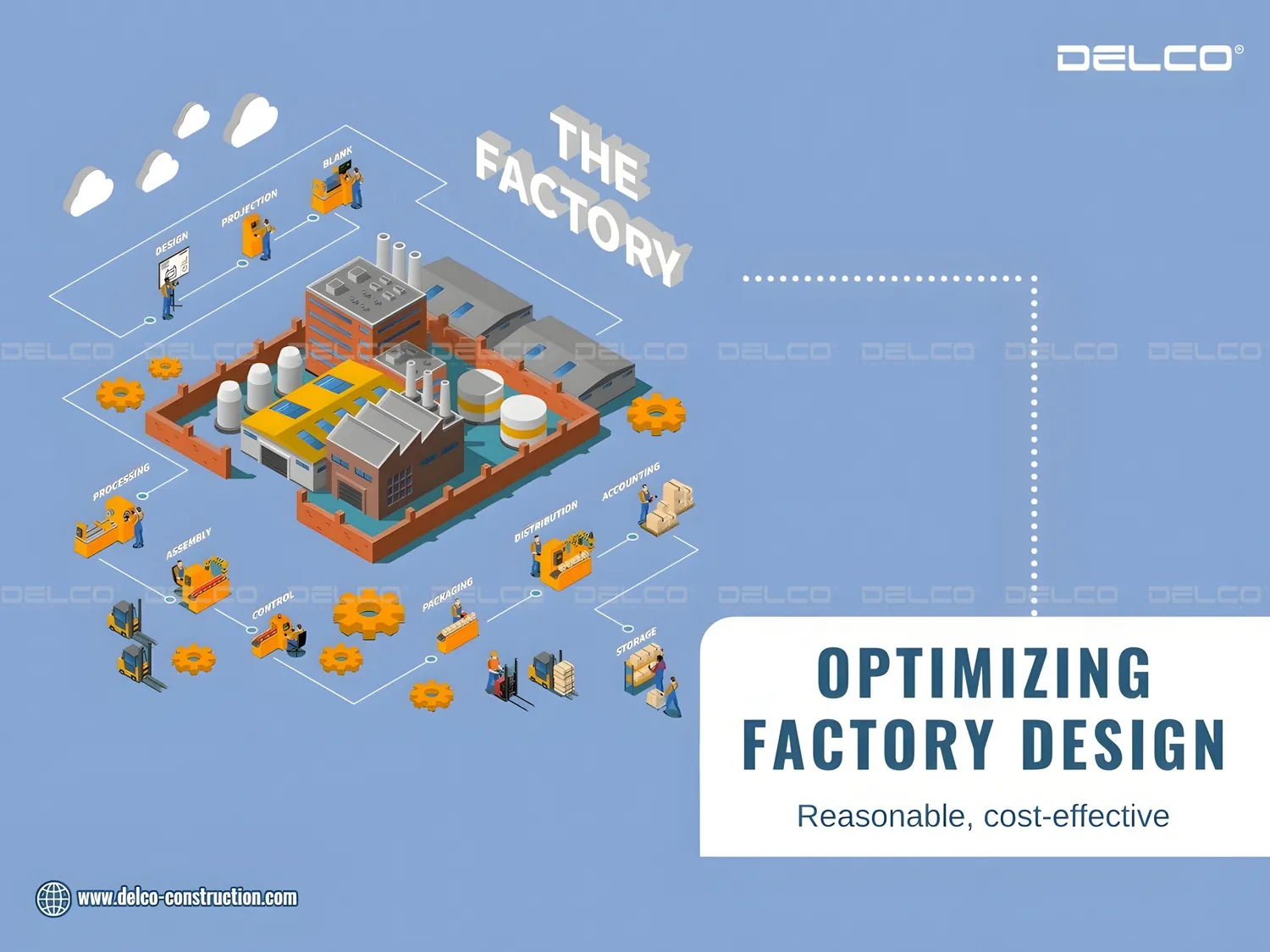
In short:
If the civil construction is the factory’s “frame,” fit‑out is the step that transforms that frame into a factory ready for operation.
2. How is fit‑out different from factory repair and renovation?
In reality, many investors confuse factory fit‑out with repair and renovation, leading to mistakes in investment planning and budgeting.
| Criterion | Factory Fit‑out | Factory Repair & Renovation |
| Timing | Before factory operation | When the factory is in operation |
| Objective | Finish for production readiness | Repair, upgrade, or change function |
| Scope | Entire layout and electromechanical systems | Part or all of existing items |
| Applications | Built‑to‑suit or leased factories | Old or degraded facilities |
Fit‑out is a strategic investment step, while renovation usually arises as a solution during operations.
3. When do businesses need factory fit‑out?
In reality, most projects leasing pre‑built factories require a fit‑out before starting operations, due to the following main reasons:
- The factory is often handed over only at a general standard, providing basic structure and infrastructure but not tailored to the specific needs of each manufacturing sector or production line.
- Differences between the landlord’s standard design and actual operational needs, including layout arrangement, floor load capacity, vibration, workforce density, and functional zoning.
- Requirements to adjust or augment MEP and fire protection systems that arise when installing machinery, production lines, or when actual power usage differs from original assumptions of the pre‑built factory.
- Industry‑specific production conditions, such as high‑power electrical supply, compressed air, process water, temperature, humidity, or cleanliness controls that the standard factory cannot inherently meet.
- Adjustment needs during the project lifecycle, not only during startup but also when expanding operations, changing products, upgrading production lines, or preparing for customer audits and certifications.
4. Common technical & legal risks in factory fit‑out in Vietnam
In many fit‑out projects, issues arise not from construction itself but from inadequate assessment at the initial stages.
Some common risks include:
- Differences between the as‑built condition and the factory’s technical documentation, leading to real limitations in floor load capacity, clear heights, technical system routing, or equipment placement compared to initial assumptions.
- Restrictions on intervention to the structure and existing condition of the facility due to industrial park regulations or lease contract terms, which can prevent implementing technically appropriate solutions.
- Shared infrastructure of the industrial park not meeting production requirements, including electrical capacity, water supply, wastewater treatment, and the factory fire protection system, which cannot be remedied solely through internal fit‑out solutions.
- Fit‑out plans not prepared in alignment with legal and procedural constraints—such as approvals, fire protection acceptance, environmental requirements, or industrial park management regulations—leading to redesign or delayed operations.
- Fragmented execution organization, where design, construction, and equipment installation are handled by separate parties without an integrated technical lead, causing conflicts between production layout, MEP systems, and safety components.
- Operational assumption changes during implementation, such as altering production lines, increasing capacity, or adjusting products after finalizing the initial fit‑out plan, resulting in cost overruns and delays to commissioning plans.

These risks, if not controlled from the beginning, can cause project delays, cost overruns, and negatively affect factory launch plans.
5. Classification of Factory Fit‑out Scope
In reality, there is no one fixed fit‑out model for all projects. Depending on investment objectives, manufacturing sector, and expected operational timeline, investors commonly choose one of three fit‑out scopes:
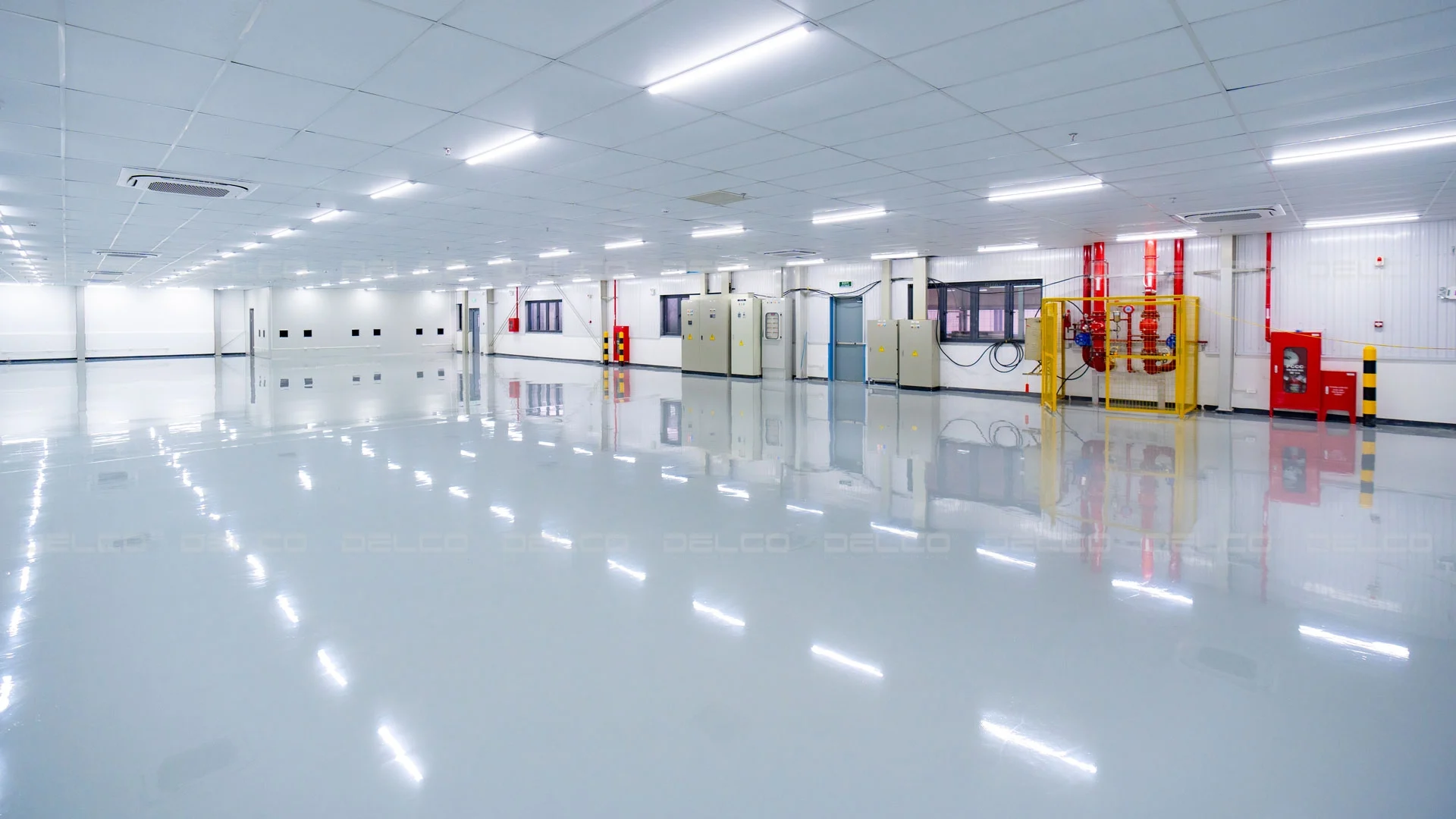
Basic fit‑out focuses on bringing the factory to a minimally usable state, with necessary technical elements such as lighting and power systems, water supply and drainage, simple ventilation, and fire protection configured to meet basic operational needs.
This level of fit‑out is typically suitable for warehouses, logistics, light assembly, or short‑term lease projects with limited machinery and low technical requirements. However, not all projects are permitted to choose basic fit‑out, as it greatly depends on the existing configuration of the factory, renovation limits, and actual functional requirements.
Standard fit‑out is the most common level in pre‑built factory leases. The work scope includes establishing a complete production layout, power and ventilation systems, cooling systems, appropriate fire protection, and the planning and implementation of office and auxiliary areas such as changing rooms, toilets, and pantry.
Standard fit‑out is suitable for medium‑ and long‑term operations in mechanical, electrical, electronic, and light industry factories. This level of fit‑out is also typically linked to approval requirements, acceptance tests, and conditions to put the factory into official operation.
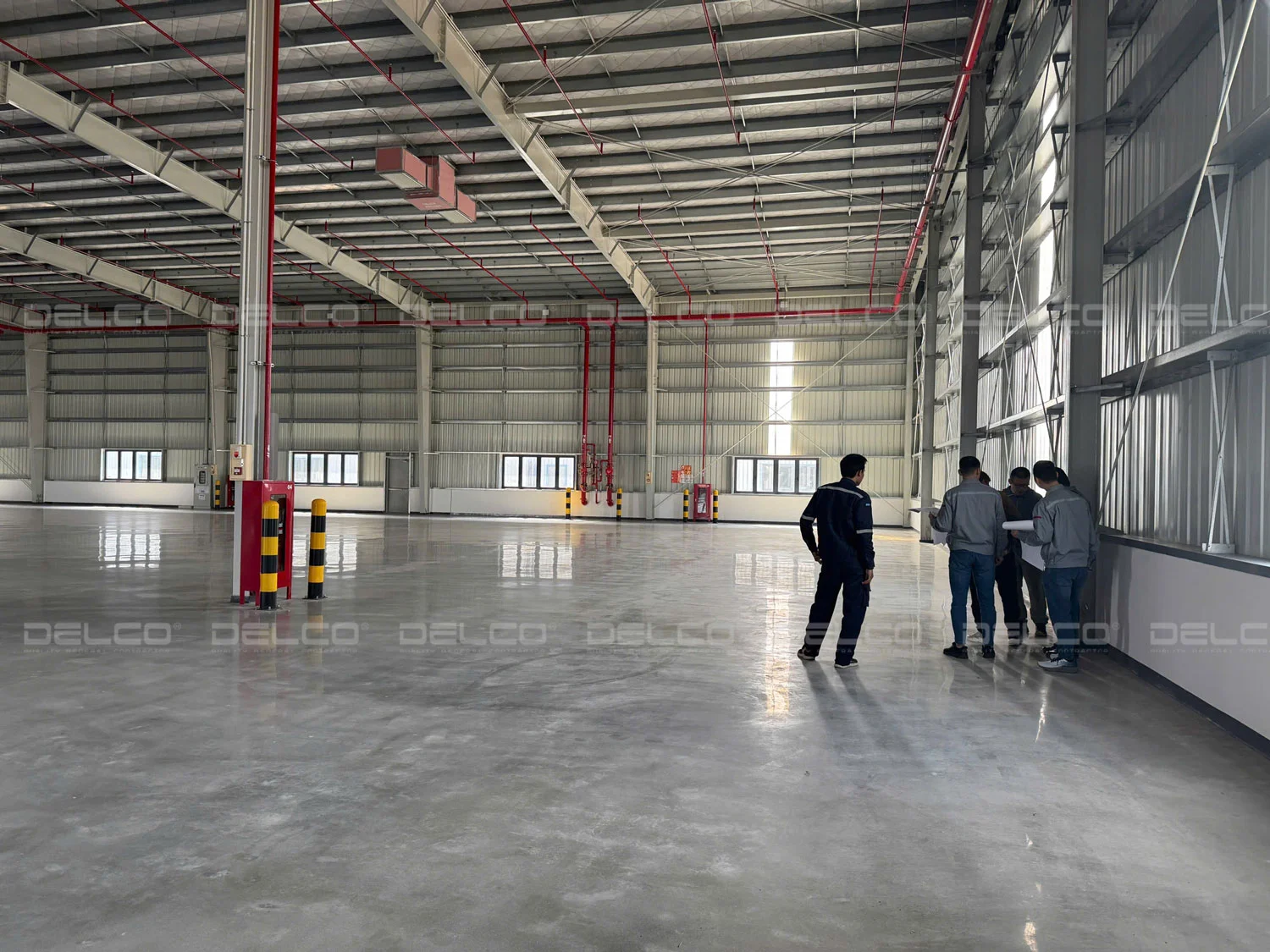
Turnkey / advanced fit‑out is applied for projects with stringent environmental control and technical infrastructure requirements, such as electronics, food, pharmaceuticals, or high‑tech industries. Fit‑out scope may include cleanrooms, high‑standard HVAC systems, compressed air and technical gas systems, process water systems, wastewater treatment as required, and deep integration of machinery and equipment within the factory space.
This level of fit‑out is heavily influenced by approval and acceptance requirements and the capabilities of the industrial park infrastructure. Choosing advanced fit‑out depends not only on budget but also on the ability of the existing factory condition and shared infrastructure to support it. Without comprehensive early‑stage assessment, the risk of delays and cost overruns is significant.
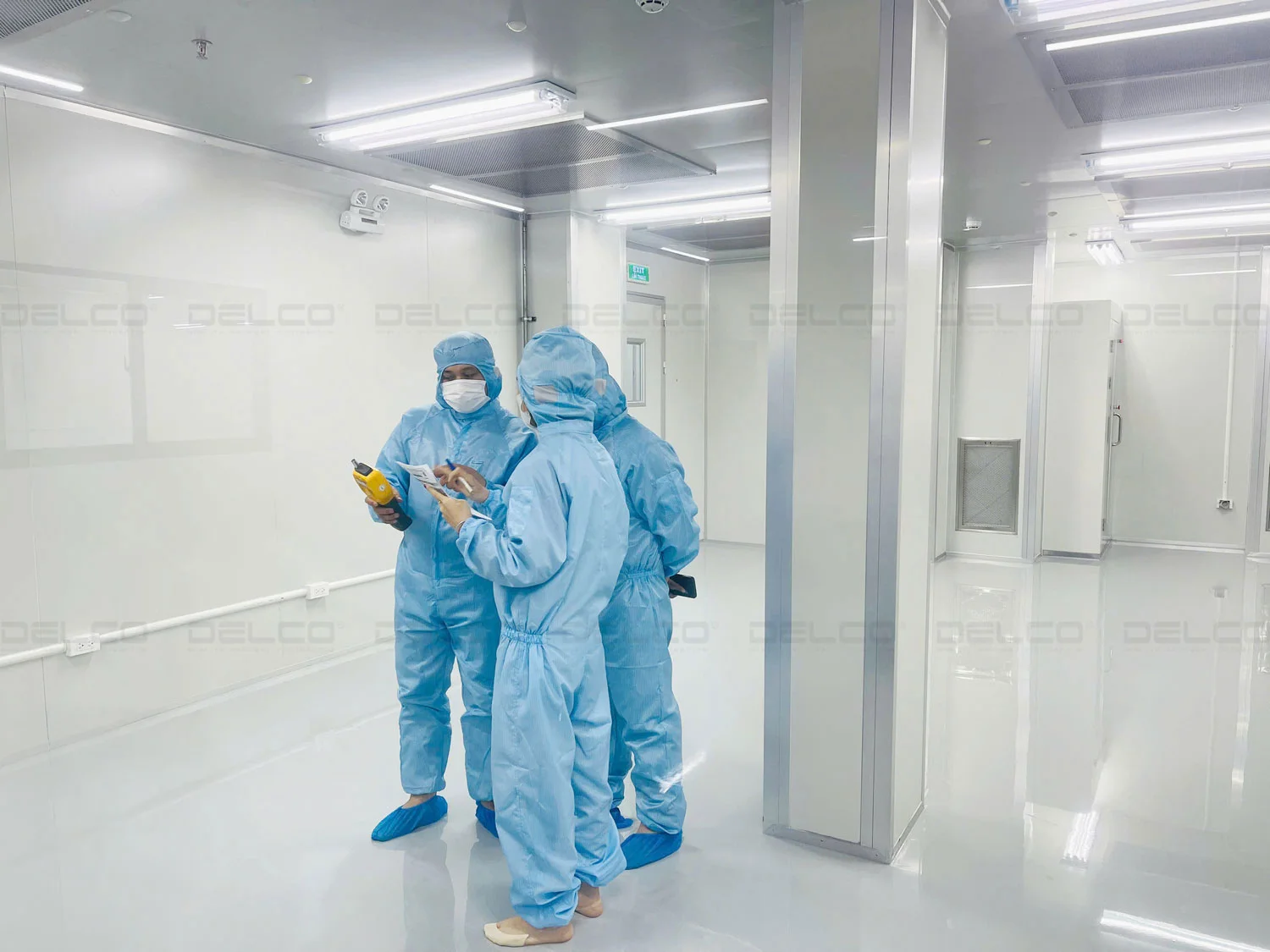
Note that choosing the wrong fit‑out level may save initial costs but increase operating costs, renovation costs, and long‑term legal risks.
6. Common Factory Fit‑out Items in Vietnam
Depending on the level of fitout and the type of manufacturing, the scope of work may vary. However, a typical factory fitout project in Vietnam usually includes two main areas: the office area and the production area.
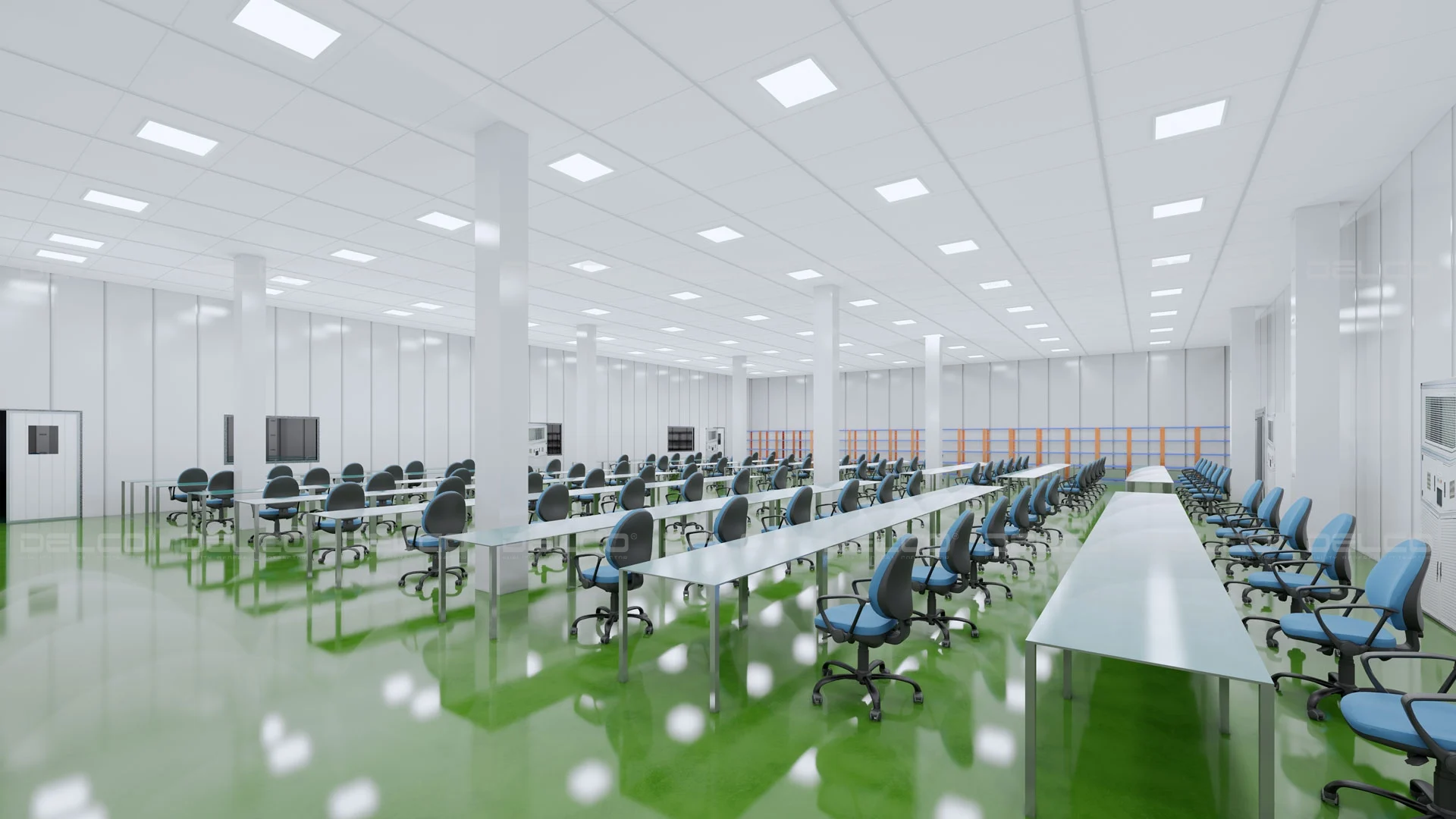
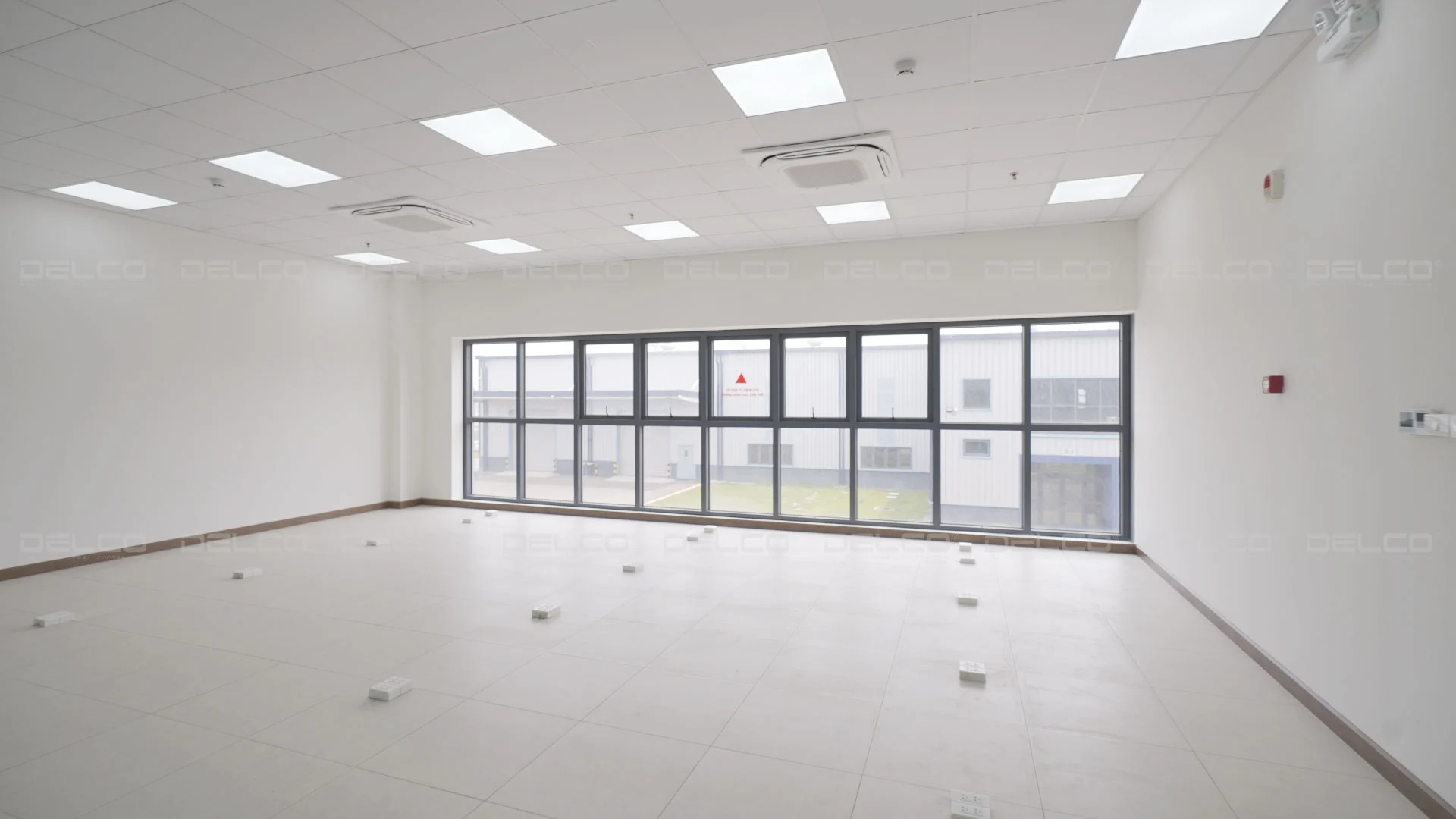
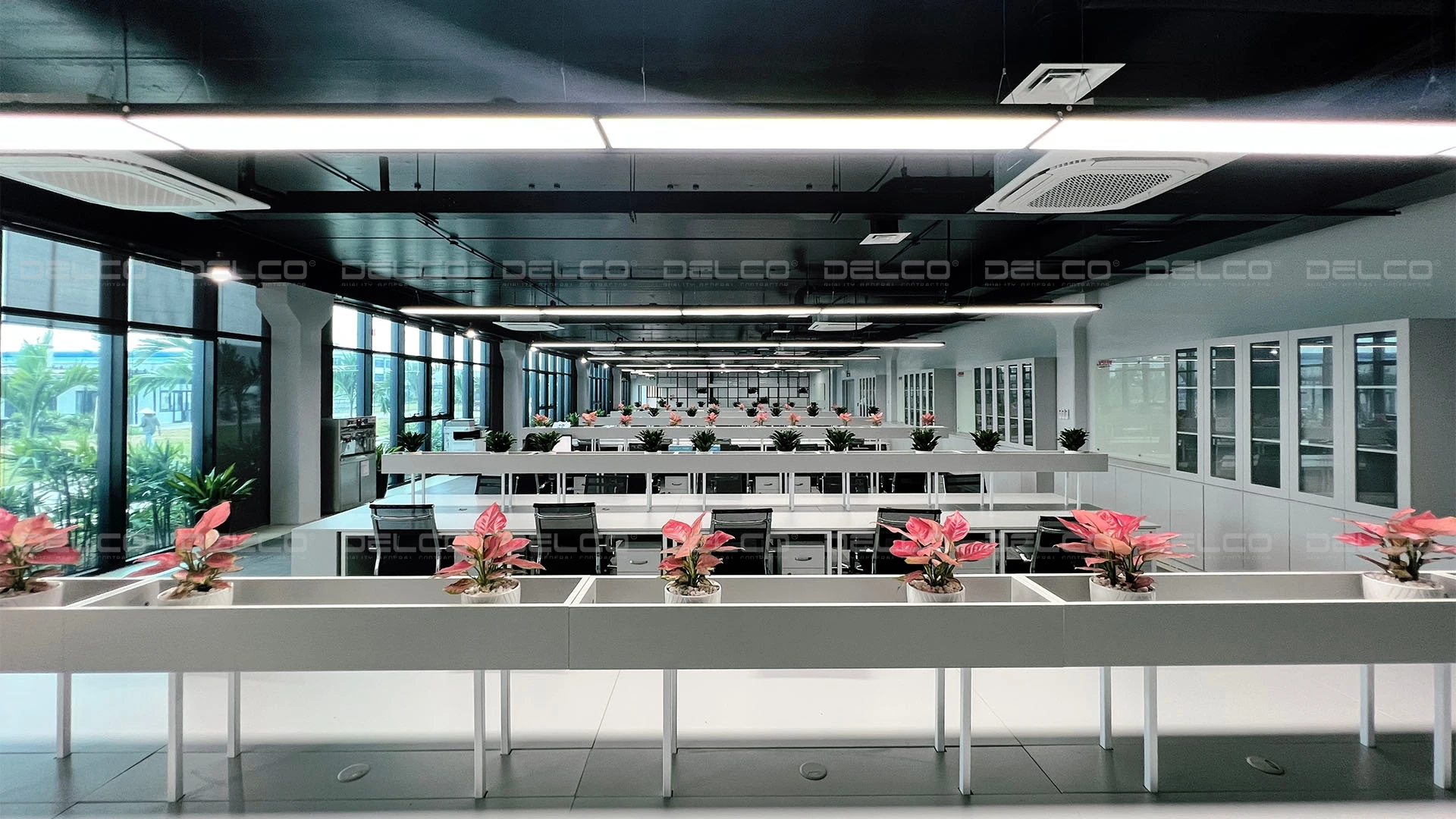
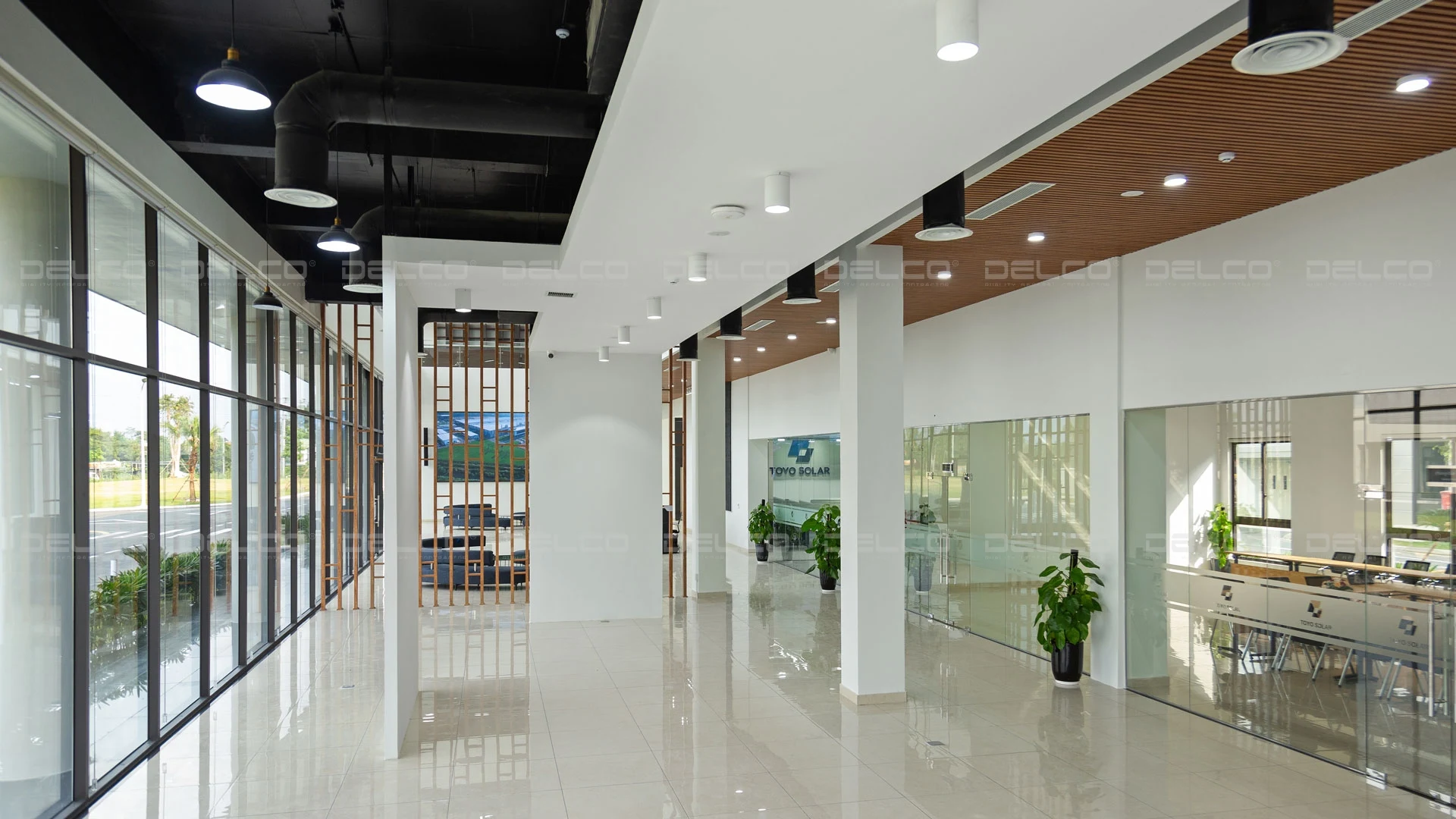
Office fitout: includes items such as the design and layout of the workspace, finishing of ceiling – partition – floor, low-voltage electrical systems, lighting, internet network, air conditioning, water supply and drainage, and basic furnishings. This area directly impacts the company’s image, working environment, and staff performance.
In ready built factory projects, the office area is often integrated directly into the factory block or built adjacent to it, and is thus still subject to structural, evacuation, and fire safety regulations. Although technical risk is relatively low, changes in function, aesthetics, or office scale during implementation may impact the overall schedule if not managed from the start.
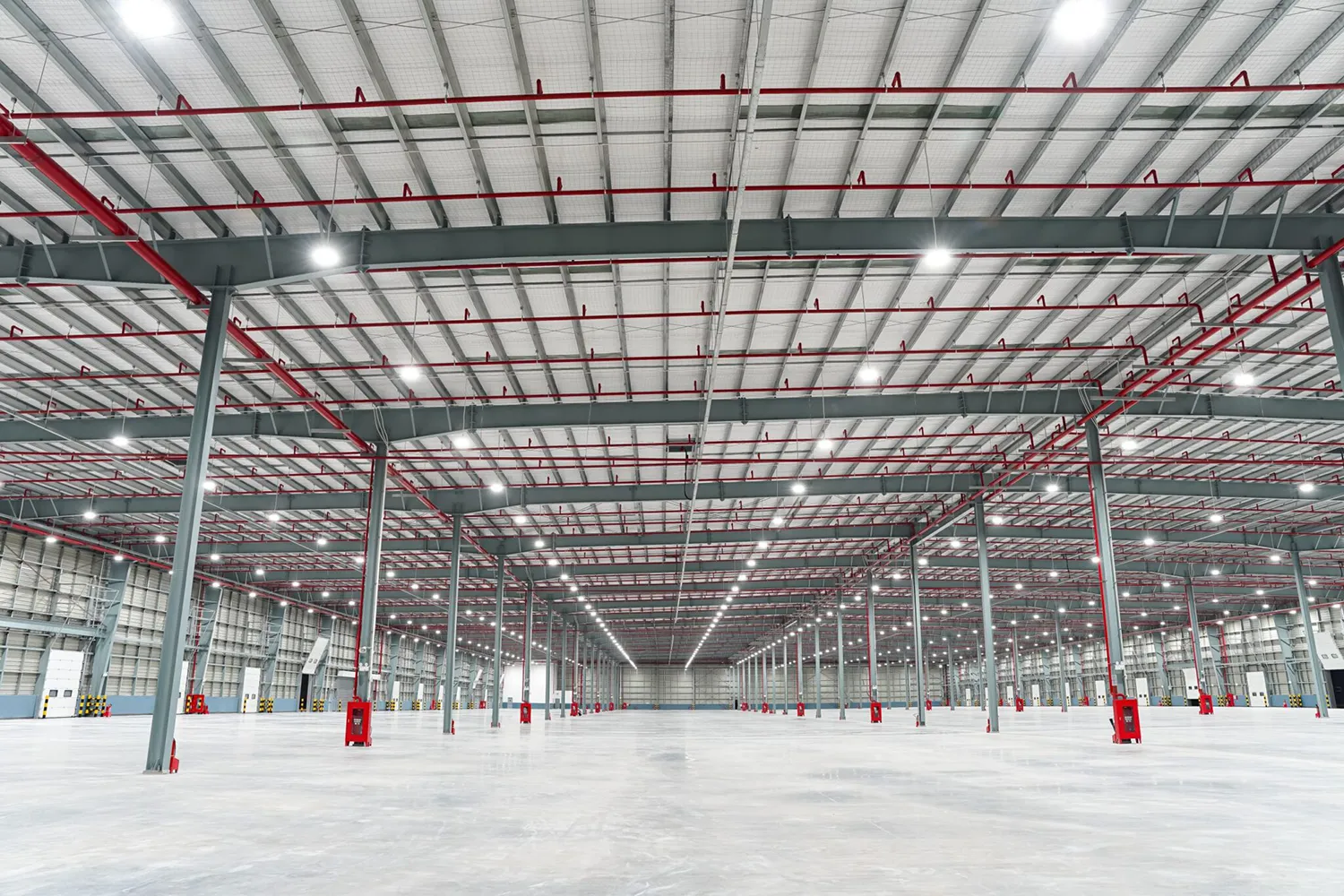
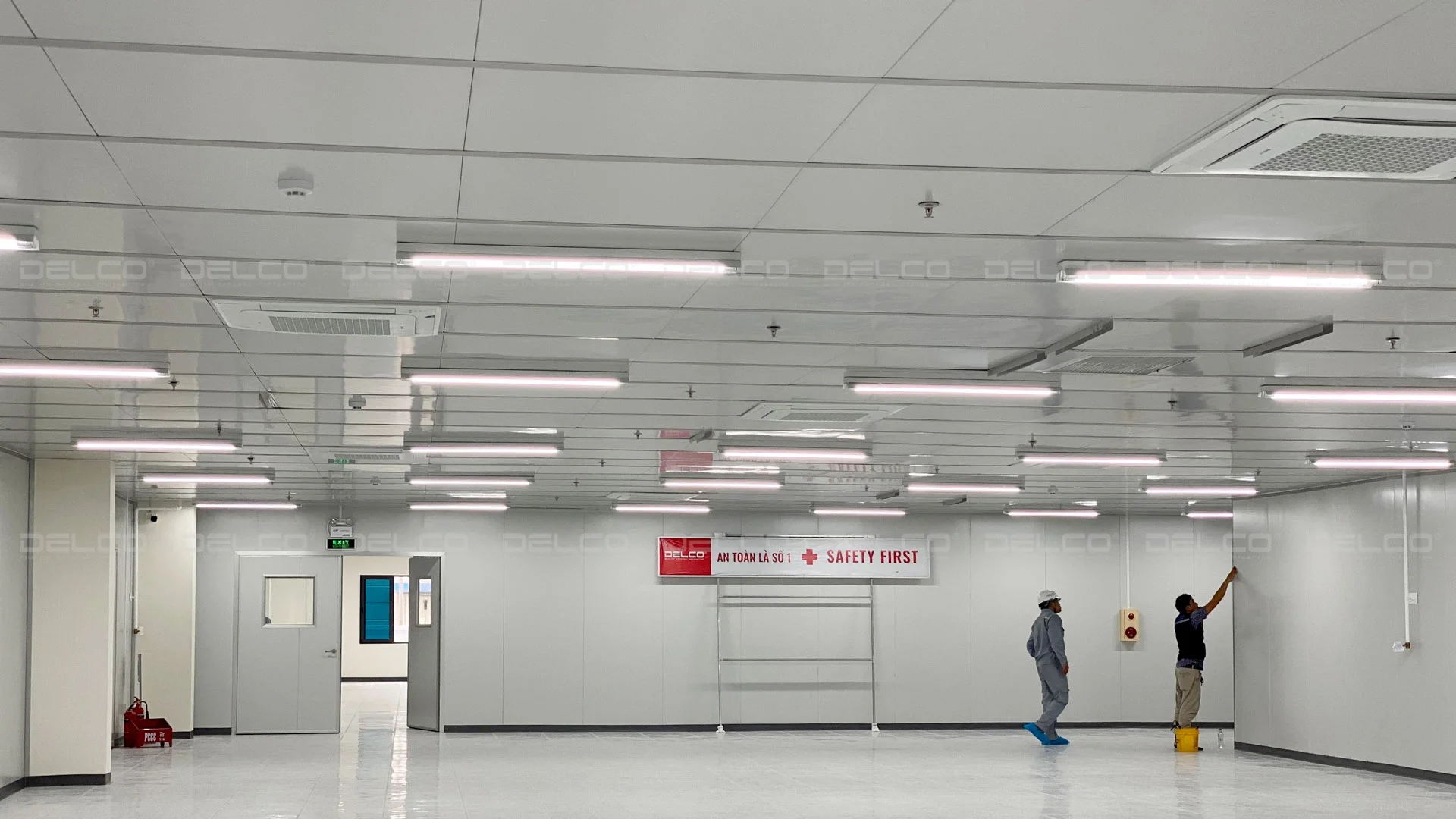
Production area fitout is the core of the project, directly determining the operability of the factory. The scope of work typically includes layout based on the production line, technical flooring, partition walls, power systems, production lighting, ventilation and cooling, fire protection systems appropriate to the function, along with auxiliary spaces such as changing rooms, restrooms, and canteen.
Beyond the standard items, the production area may also involve specialized infrastructure depending on the industry, such as cleanrooms, temperature and humidity control, compressed air, technical gases, process water, and installation and alignment of machinery and equipment. This is a complex area influenced simultaneously by technological requirements, existing factory conditions, and renovation limits—thus often being the largest source of risk in fitout projects.
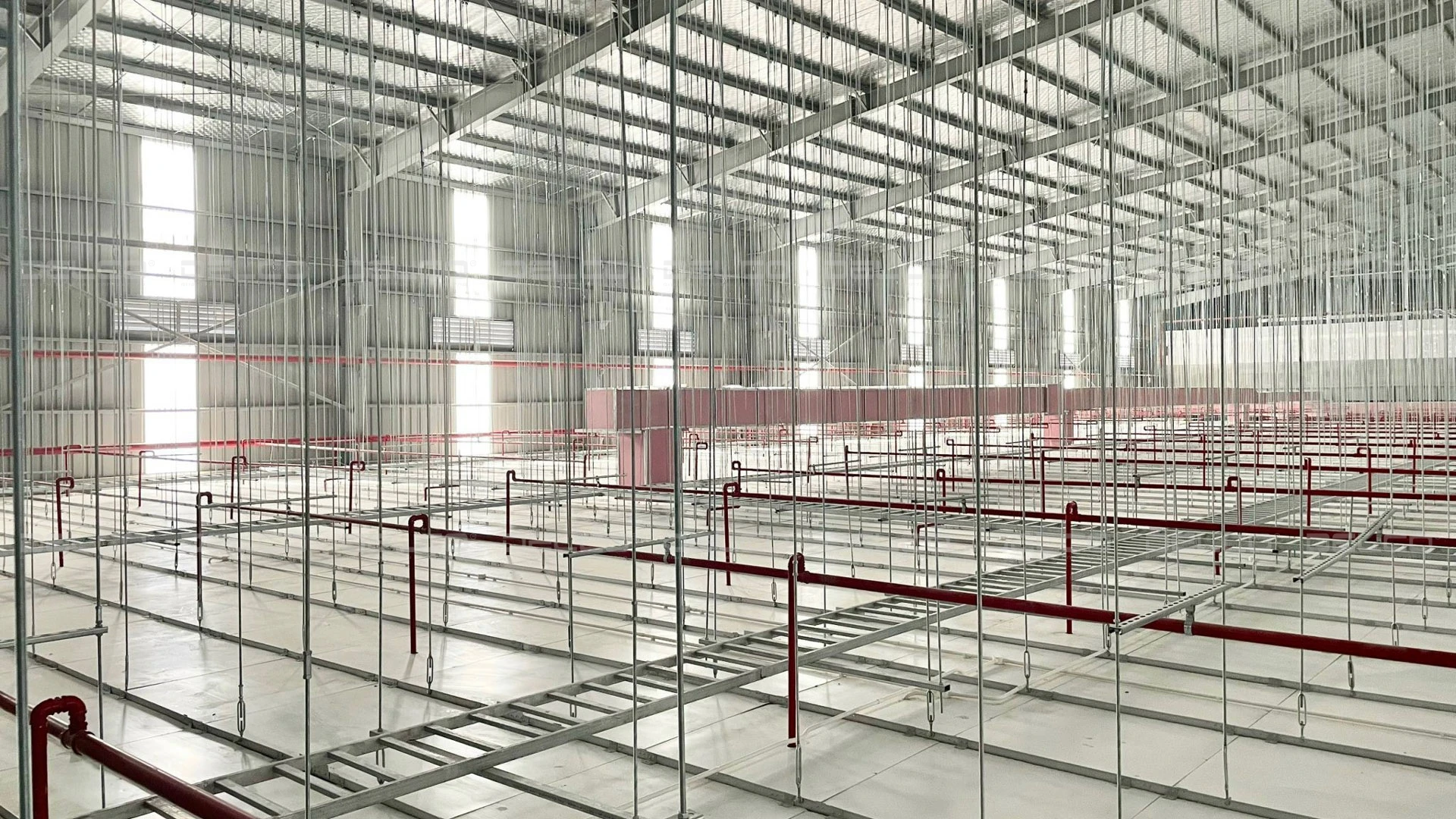
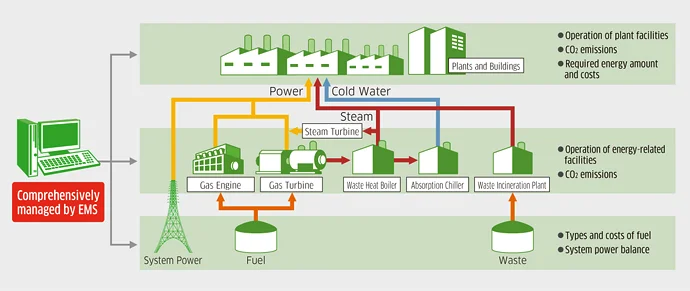
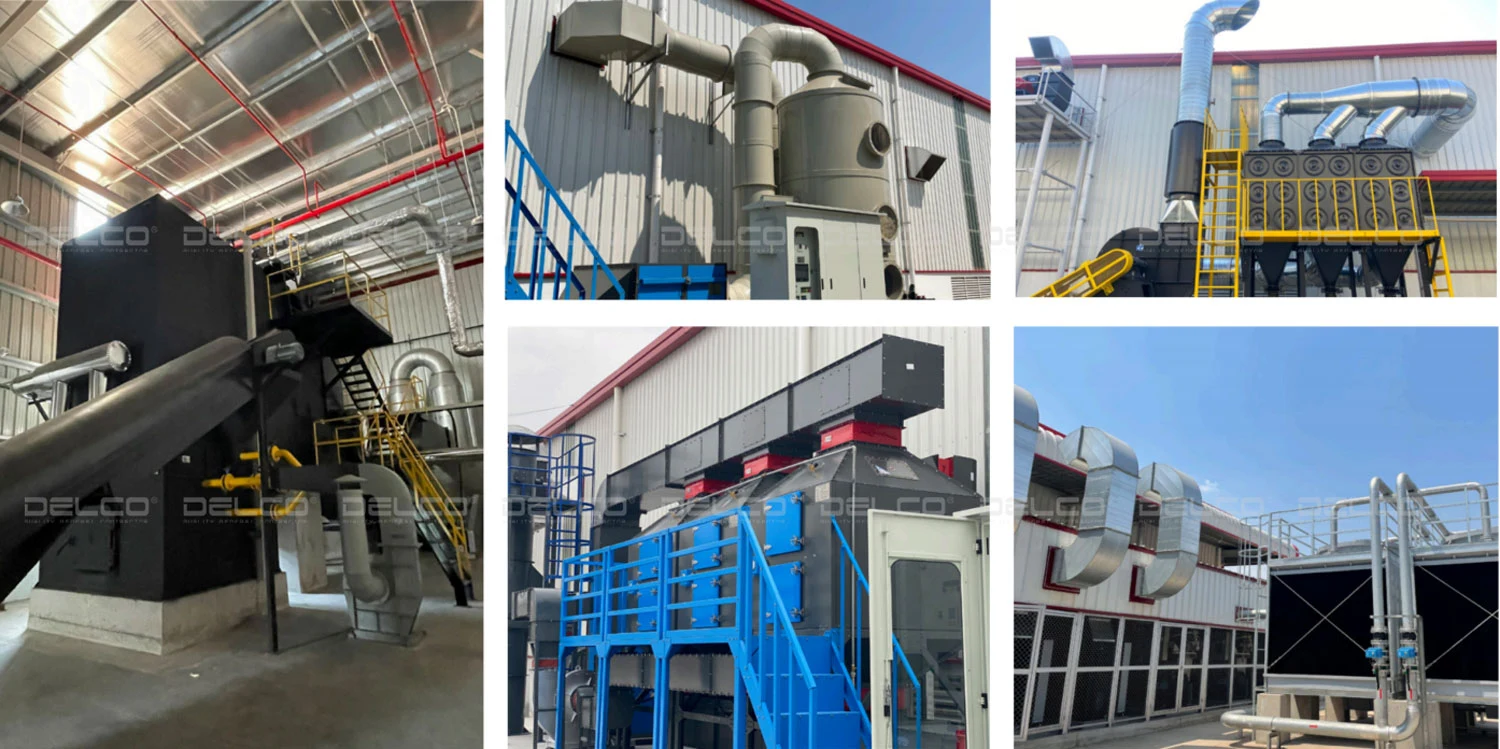
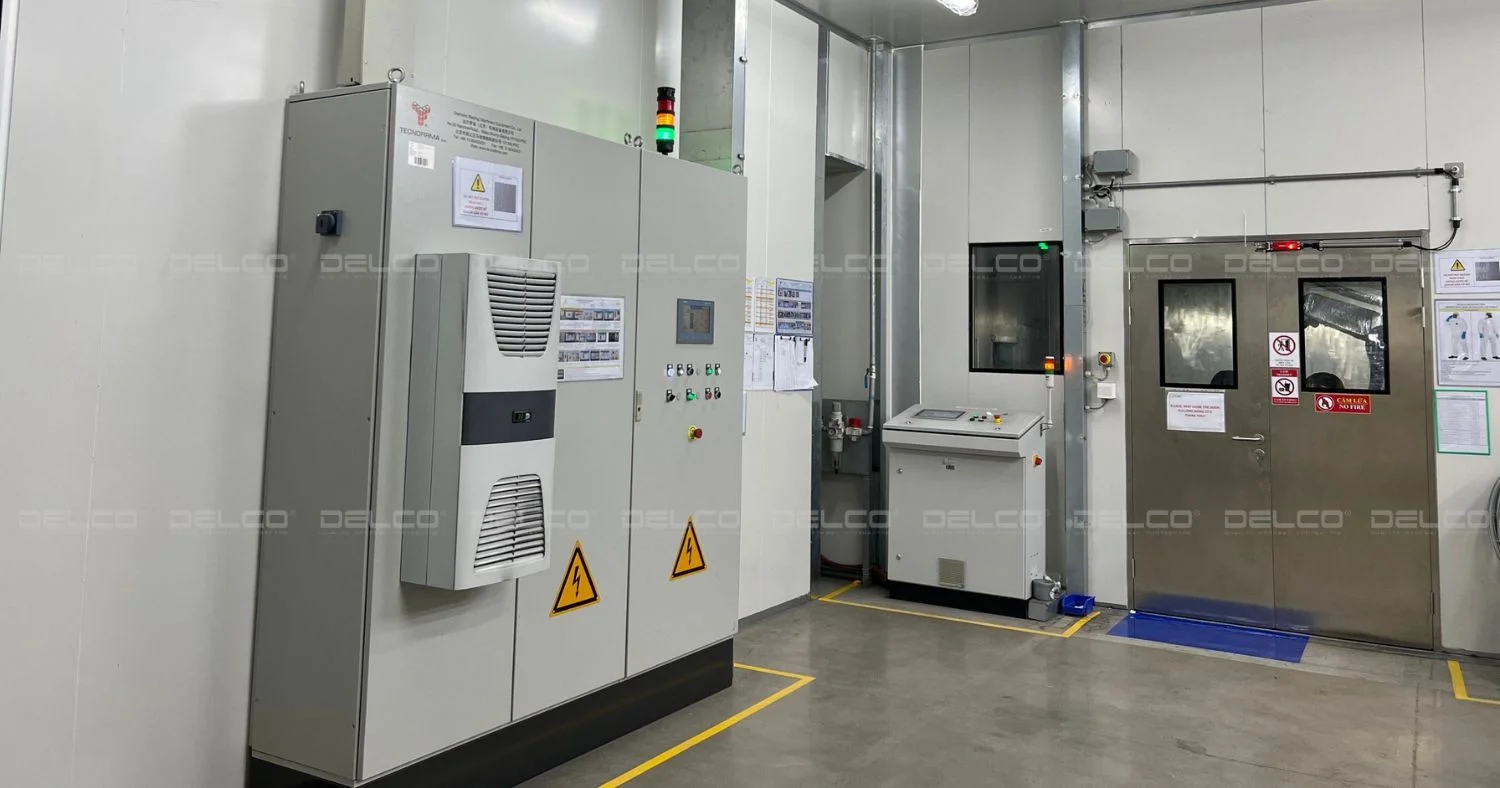
Technical zone and auxiliary infrastructure: This group of items is often underestimated in the early stages, yet plays a vital role in ensuring the stable operation of the factory. This scope includes technical rooms, power substations, machine rooms, central HVAC systems, AHU, chillers (if any), compressed air systems, process water supply and treatment, wastewater treatment, as well as technical spaces for operation and maintenance.
Technical items usually occupy considerable space, require high load capacity, and must connect smoothly with the industrial park’s shared infrastructure. In many projects, restrictions on equipment placement, infrastructure capacity, or renovation conditions in the technical area are decisive factors in selecting the fitout level and overall implementation plan.
7. Criteria for choosing a reputable factory fitout contractor
To ensure an effective fitout project, investors should prioritize contractors that meet the following criteria:
- Proven past projects: The first step is to verify credibility through a portfolio of similar completed projects, conduct site visits, or contact previous clients for confirmation.
- Industry-specific experience: After confirming real experience, assess whether the contractor has worked on multiple projects in your specific field (electronics, food, mechanical, etc.) to ensure a solid understanding of specialized requirements.
- Full Design & Build capability: Evaluate their ability to deliver a turnkey solution from design to construction, ensuring consistency and minimizing the need for multi-party coordination.
- Solution integration: Assess how well they integrate various components (structure, MEP, interior, fire safety…) into a seamless and unified system to avoid patchwork results.
- Legal and regulatory knowledge: Verify deep knowledge of fire protection, environmental, and occupational safety regulations in Vietnam to avoid legal risks later.
- Cost, schedule, and risk optimization: Examine their creative solutions, detailed planning, and ability to manage risks effectively.
- Integrity and transparency: Evaluate their openness in quotations and contracts; no hidden costs; honest consultation for long-term investor benefit.
- Long-term support: Lastly, prioritize partners who offer quick maintenance, warranty services, and expansion consulting post-construction.

Choosing the right fitout contractor from the beginning helps reduce unexpected costs, avoid delays, and manage legal risks effectively.